

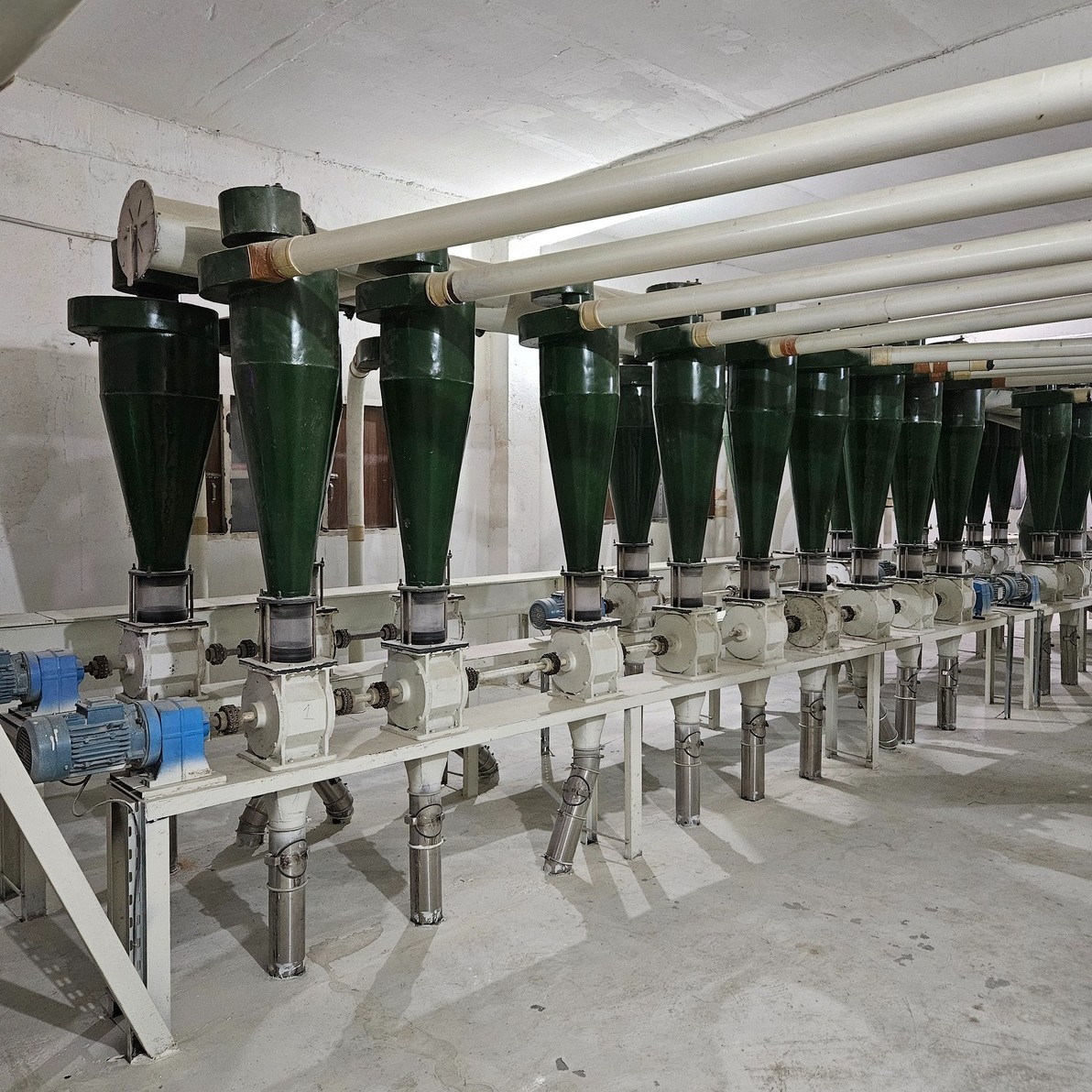
A Pneumatic Lift System for Powder Material Handling is used to transport powder or fine materials through pipelines using air pressure or vacuum. It is widely used in industries like flour mills, spice processing, starch plants, cement plants, and chemical industries.
1. What is a Pneumatic Lift System?
A pneumatic lift (pneumatic conveying system) moves powder materials such as flour, spices, starch, or dust from one point to another using airflow inside pipes instead of mechanical conveyors.
It is useful when material needs to move vertically to upper floors or silos.
2. Main Components
Typical pneumatic powder lifting system includes:
Blower / Air Compressor
Generates airflow to move powder.
Feeding Device
Usually a rotary airlock valve or screw feeder that feeds powder into the pipeline.
Pipeline (MS / SS Pipes)
Carries the powder-air mixture to the destination.
Cyclone Separator
Separates powder from air at the outlet.
Dust Collector / Bag Filter
Removes fine particles from air.
Storage Hopper / Silo
Final storage point for powder.
3. Working Principle
Powder enters the rotary valve feeder.
High velocity air from blower carries powder into pipeline.
Powder travels through pipes to the destination.
Cyclone separator separates powder from air.
Powder drops into hopper or machine.
Clean air exits through dust filter.
4. Types of Pneumatic Conveying
1. Positive Pressure System
Uses blower to push powder through pipes.
Used for long distances and higher capacity.
2. Vacuum System
Uses vacuum pump to suck powder.
Used for short distance and clean transfer.
5. Applications
Common industries using pneumatic powder lifting:
Flour mills
Spice grinding plants
Starch processing plants
Food processing plants
Chemical powder handling
Cement industries
6. Advantages
Dust-free material handling
Requires less manpower
Closed system (hygienic)
Can move material vertically and horizontally
Low material loss
1. What is a Pneumatic Lift System?
A pneumatic lift (pneumatic conveying system) moves powder materials such as flour, spices, starch, or dust from one point to another using airflow inside pipes instead of mechanical conveyors.
It is useful when material needs to move vertically to upper floors or silos.
2. Main Components
Typical pneumatic powder lifting system includes:
Blower / Air Compressor
Generates airflow to move powder.
Feeding Device
Usually a rotary airlock valve or screw feeder that feeds powder into the pipeline.
Pipeline (MS / SS Pipes)
Carries the powder-air mixture to the destination.
Cyclone Separator
Separates powder from air at the outlet.
Dust Collector / Bag Filter
Removes fine particles from air.
Storage Hopper / Silo
Final storage point for powder.
3. Working Principle
Powder enters the rotary valve feeder.
High velocity air from blower carries powder into pipeline.
Powder travels through pipes to the destination.
Cyclone separator separates powder from air.
Powder drops into hopper or machine.
Clean air exits through dust filter.
4. Types of Pneumatic Conveying
1. Positive Pressure System
Uses blower to push powder through pipes.
Used for long distances and higher capacity.
2. Vacuum System
Uses vacuum pump to suck powder.
Used for short distance and clean transfer.
5. Applications
Common industries using pneumatic powder lifting:
Flour mills
Spice grinding plants
Starch processing plants
Food processing plants
Chemical powder handling
Cement industries
6. Advantages
Dust-free material handling
Requires less manpower
Closed system (hygienic)
Can move material vertically and horizontally
Low material loss